

Your Kodak Moment Deserves More: Digitize Photo Slides Today

By Geoff Weber
Geoff founded Heirloom to help families preserve and share the memories that connect generations.
For generations, a Kodak moment meant something profound: a pause in time captured on film, carefully mounted in a slide, and shared on a living-room wall. Those moments were created when cameras busy with manual focus, exposure, and patience ruled family photography—long before smartphones made photos disposable.
Today, those same memories deserve more than a fading box in a closet.
Kodak’s Dominant Position in the Film Era
For much of the 20th century, the Eastman Kodak Company held a dominant position in the global film market. With enormous market share, Kodak defined how families captured birthdays, weddings, vacations, and everyday life. The iconic yellow box symbolized trust, consistency, and craftsmanship.
Slide film—especially 35mm—was widely regarded as the gold standard for high quality color, sharpness, and archival value.
The Digital Camera in 1975—and a Missed Future
Ironically, Kodak engineers invented the digital camera in 1975, pioneering early digital technologies that captured images electronically instead of chemically. While revolutionary, this breakthrough threatened Kodak’s core business.
As digital imaging improved and costs fell, Kodak hesitated to disrupt its profitable film ecosystem. That hesitation proved costly. Kodak filed for Chapter 11 bankruptcy in 2012—often summarized as Kodak filed—a reminder that even industry leaders can fall behind technological change.
Film Camera vs. Digital Photography
A film camera captures light through a chemical reaction on physical film. The results can be beautiful and nuanced—but also fragile. Time, humidity, and temperature slowly degrade film.
Digital photography converts light into data. When stored properly, digital files don’t fade, crack, or grow mold. They can be duplicated perfectly, shared instantly, and preserved indefinitely through modern storage systems.
Why Slides Degrade, Even in Storage
Even slides stored carefully are aging.
Color dyes gradually fade and shift.
Dust, fingerprints, and mold accumulate.
Plastic mounts become brittle.
Film warps with temperature changes.
No storage box or closet can stop chemistry. Film was never designed to last forever.
High Quality Preservation Through Digitization
Professional slide digitization preserves the original image while freeing it from physical decay. Each slide is scanned at high quality resolution, capturing color depth, contrast, and detail—often revealing elements that weren’t obvious when projected decades ago.
Once digitized, your slides can be viewed on phones, tablets, and TVs, shared easily with family and friends, backed up securely in multiple locations, and preserved without further deterioration.
From Film Market Decline to Digital Imaging
The shift away from film wasn’t about abandoning tradition—it was about protecting it. As digital imaging matured, it became the safest and most reliable way to preserve irreplaceable memories.
Kodak’s history illustrates a powerful truth: moments matter more than the medium that captured them.
Digitize Photo Slides for the Future
Your photo slides tell stories no modern algorithm can recreate. They deserve a future beyond a shelf or shoebox. Digitizing them honors the care taken when they were first captured—when cameras were busy, film was precious, and every exposure mattered.
Digitize your photo slides today, and ensure your Kodak moments remain vivid, accessible, and meaningful for generations to come.

What Format Were My Slides?
If you're unsure what type of slide you have, start here:
Read our guide on how to convert slides to digital.
From 35mm to 126 or 110 format, Heirloom scans them all. If you want to digitize slides, we’ll help you identify what you’ve got and make sure it’s rescued the right way.

A Real-Life Kodak Moment (and What Happens When It’s Lost)
One of our customers brought in a shoebox of photo slides she found in her father’s attic. She hadn’t seen her parents’ honeymoon photos—ever. When she finally viewed them digitally, she burst into tears. “I’d only seen them as a story. Now, they’re part of my story.”
That’s the power of digitization. The past becomes part of the present again.

📧 Want more tips like this?
Subscribe to Heirloom emails to learn how to preserve your priceless memories. Get discount codes for expedited shipping, quality digitizing, and secure cloud storage. We never spam, and it’s easy to unsubscribe at any time.
More stories
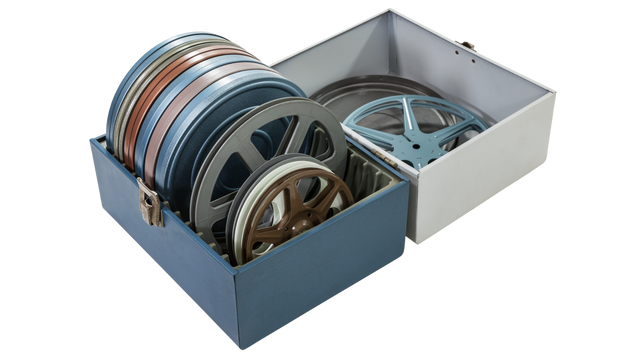
Super 8 Film: How to Rescue Priceless Family Memories from Old Reels
What Is Super 8 Film and Why Was It So Popular? Introduced by Kodak in 1965, Super 8 film became a household staple for capturing birthdays, holida...

When Were Cameras Invented?
Every treasured photograph—from your grandparents’ wedding day to your child’s first steps—exists because of one life-changing invention: the camer...
Get the Free Memory Rescue Guide
Learn what to save first!